No real fire was missed in the recorded test runs
A reader for the verification call, the phone call a monitoring centre makes after a fire alarm. It reads each reply in Arabic or English, and only a clear harmless answer from someone at the property closes the alarm.
The test, in figures
- 0 of 23
- Real fires missed, all runs
- 43 of 48
- Cause read correctly from the reply
- 8 to 72
- Seconds to dispatch in a surge, against 91 to 1,200 in the queue
- About 0.35 seconds
- Seconds per reply, median
The problem
When a fire alarm reaches a monitoring centre, an operator phones the people registered for the property, listens and decides. The person who runs the national home fire-alarm programme called alarms with no fire behind them "a source of extra spend for the civil defence". In a surge, a burst of alarms faster than the operators can phone them, the real fires wait in the queue behind the false ones.
The build
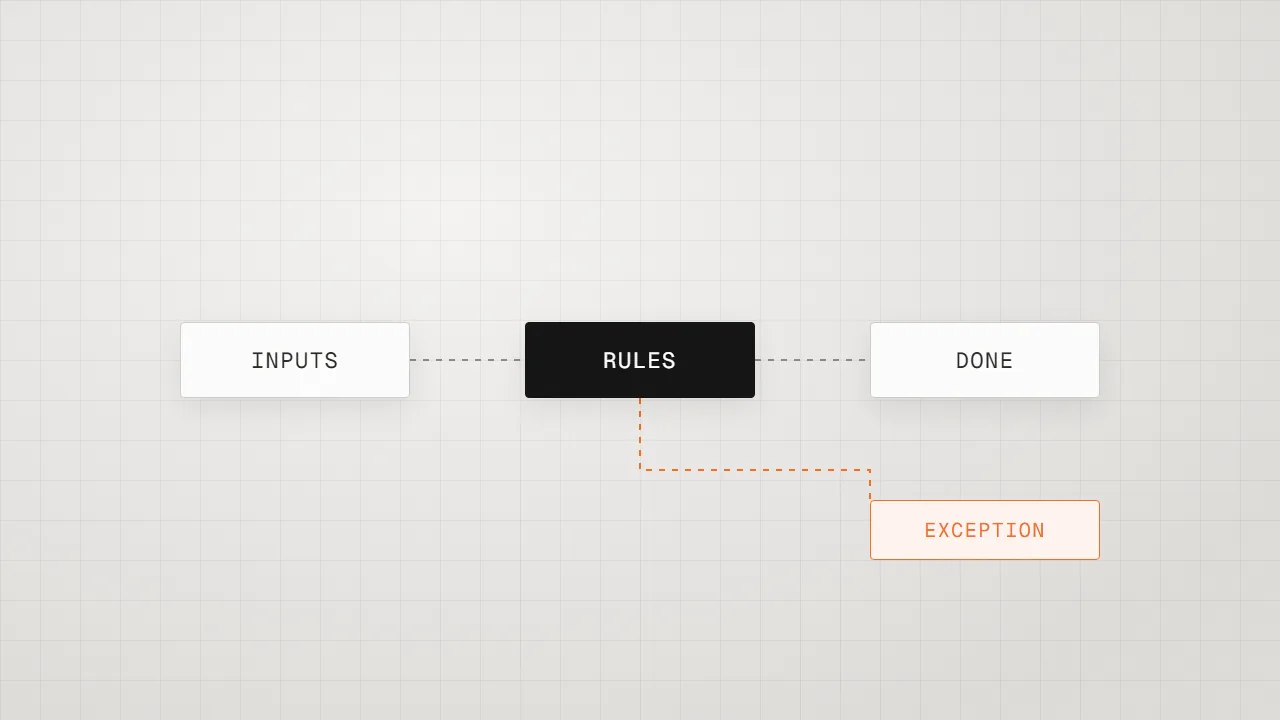
Every registered contact is called at once. A model that can only pick from fixed options reads each reply in about a third of a second, in Arabic or English, and says fire, harmless or unclear. Fixed rules in code then do what the protocol already says: no answer sends a crew, fire sends a crew, and unclear sends a crew and hands the case to a person. The cause is written against every alarm.
The test
On 20 September 2026 the version ran on a quiet day of 55 alarms, then on two surges of 60 alarms in two minutes with four real fires hidden inside each. The operator queue reached the four fires after 91 seconds to 20 minutes. The version reached them in 8 to 72 seconds and missed none, and it never closed an alarm that was a real fire.
What a person still decides
The model returns options and probabilities only, and the rules act on one answer. The operator sees every unclear case and can override it, and every answer and every override is logged.
Read the full paper
Issue 2, Rev A, September 2026. It gives the problem, the design and the test, with every source and the file each figure comes from. Read the full paper as a PDF.